Work & Impact

The work, across roles

Dr. Fields' work has moved from individual schools to districtwide systems. Each chapter reflects a different scale of responsibility, and a consistent attention to people, access, institutional clarity, and the conditions that allow students and educators to thrive.

01 · Superintendent · 2025–present

Ferguson-Florissant School District
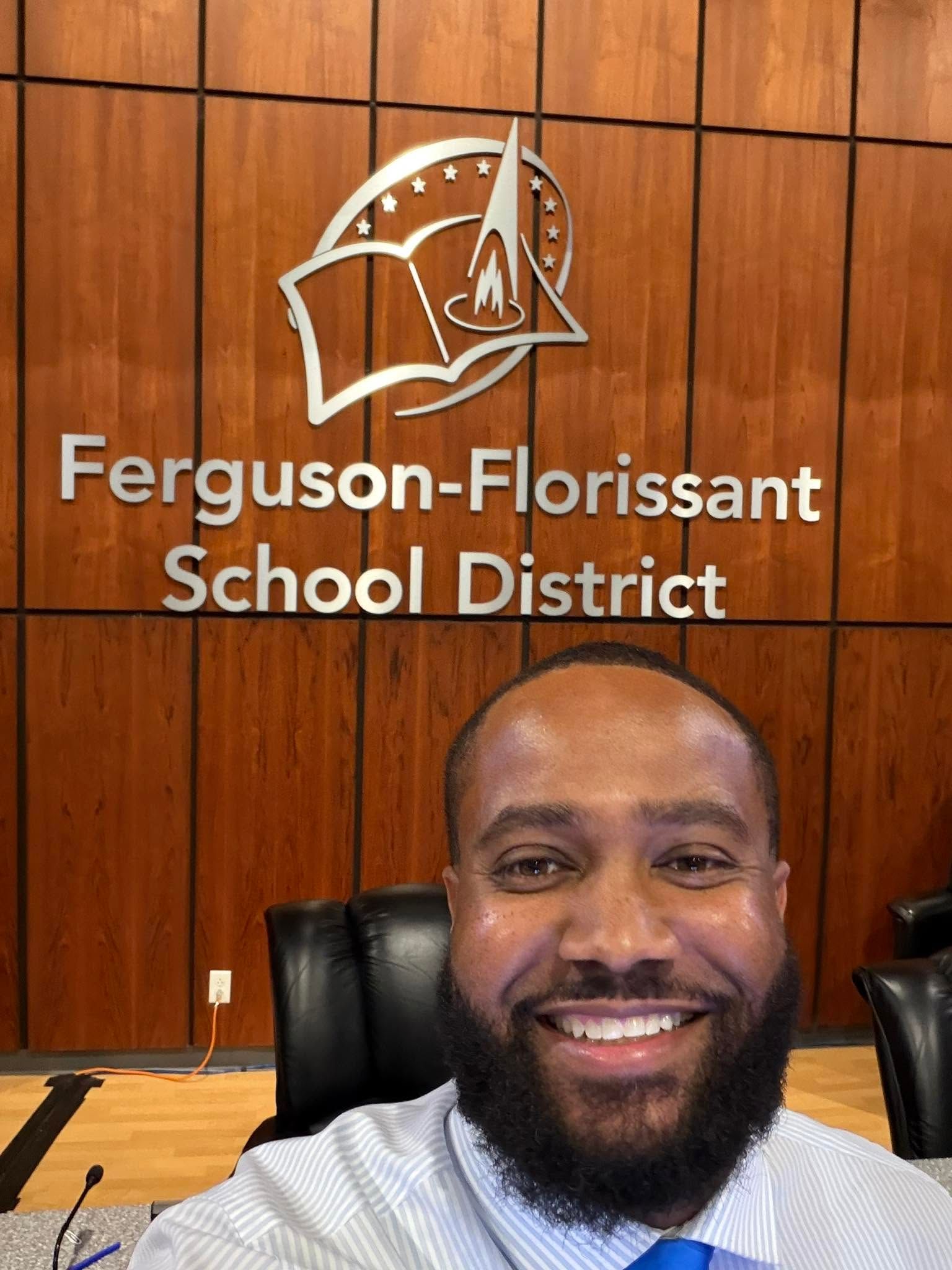
In the FFSD boardroom

Dr. Fields returned to the district where he attended preschool and completed his student teaching, this time as its superintendent. The first year confronted financial, operational, staffing, facilities, academic, safety, culture, and community-trust challenges at once.

By year's end, the district reported a projected unrestricted fund balance near 14%, up from a projected 2.06%, and a projected $3.3 million surplus in place of a projected $5.6 million deficit, its largest projected surplus since 2018. Alongside the fiscal reset: more transparent budgeting and Board meetings, more candid community engagement, the passage of Proposition S, elevated student voice, shared data review among administrators, and 30-, 60-, and 90-day plans aligned with district priorities.

These results are district-reported projections and shared accomplishments of the Board, administration, employees, students, families, and community. The academic, facilities, safety, culture, staffing, and trust work continues.

District year-end reporting · First Alert 4 · FFSD The first-year report  →
02 · District Human Resources Leadership

Kirkwood School District

Human resources is often treated as backstage work. At Kirkwood, Dr. Fields treated it as the operating system of a district: retention, recruitment, labor strategy, belonging, and organizational culture.

Official accounts credit his tenure with the district's strongest staff retention in recent years and labor negotiations shaped around long-term fiscal sustainability and workplace equity. During that tenure, Kirkwood's first certified-staff collective-bargaining agreement took effect (July 1, 2024), and the district adopted a paid parental-leave policy of up to 40 calendar days for all staff.

FFSD leadership profile · Kirkwood employee handbook · Kirkwood 2026–27 budget
03 · Principal · 2014–15 onward

Koch Elementary, Riverview Gardens

14 42

Missouri state report-card points, of 70 possible, after his first year: a 28-point gain, roughly a tripling of the score. Sometimes summarized as a “200% increase” in the school's Annual Performance Report score; the measure is the 70-point state report card, not percentage points.

In his first year as a principal, Koch Elementary, the school Dr. Fields himself attended, sat near the center of the Ferguson unrest, with a single access road on Canfield Drive. The school stayed open. When neighborhood grocery access was disrupted, it created a food pantry.

The team paired trauma-informed support with academic focus after five consecutive years of declining MAP results. Students produced Koch TV, a school news program that asked them to research, write, interview, listen, and lead. Fifth-grader Myauna Hayes put the leadership approach simply: “Mr. Fields steps back and lets us do what we're capable of.”

The same reporting connected the school's gains to Riverview Gardens being named Missouri's most improved district for 2014–15. Stability and ambition were not competing priorities; the school met immediate human needs while protecting academic purpose.

UMSL · St. Louis Public Radio report reprinted by St. Louis American · NAESP
04 · Principal · ~3 years

Givens Elementary & Steger Sixth Grade Center, Webster Groves

The question at Webster Groves was not what new resources to request. It was what students could gain access to with the capacity already present. Students gained Computer Science, Foreign Language, Drama, and Art and Design, taught by existing district-certified staff, as a response to access gaps affecting students of color, low-income students, and students with learning disabilities.

The gifted-assessment process was rethought so that historically underrepresented students were no longer screened out by the mechanics of identification. And through Passion Days, teachers, community members, and students successively taught interest-based classes (archery, DJing, painting, rocketry), putting knowledge from the whole community into the school day.

NAESP profile · NAESP Show & Tell · FFSD
← Home Speaking & professional learning  →